English
 Polish
NCBJ has developed a concept for reactors that can produce electricity, heat and hydrogen
09-03-2026
The National Centre for Nuclear Research has developed a concept for a nuclear reactor that could simultaneously generate electricity, heat for industry and hydrogen. According to researchers from the NCBJ – Janusz Malesa, Błażej Chmielarz, Dominik Muszyński and Maciej Skrzypek – a solution based on high-temperature gas-cooled reactors could help reduce CO2 emissions and support the energy transition.
The results of the Polish team's research were published in a scientific journal Sustainable Energy Technologies and Assessments (Volume 86, luty 2026, artykuł 104844).
https://doi.org/10.1016/j.seta.2026.104844
Today, the global energy transition focuses primarily on the development of renewable energy sources and electricity production. Meanwhile, a significant portion of greenhouse gas emissions comes from industry, which requires enormous amounts of very high-temperature heat and hydrogen used, among other things, in the production of fertilisers, synthetic fuels and steel. Currently, most hydrogen is produced from natural gas through methane reforming, which involves high carbon dioxide emissions. That is why scientists around the world are looking for technologies that allow hydrogen and energy to be produced for industry without the use of fossil fuels.
One solution may be high-temperature gas-cooled reactors, known as HTGRs (High Temperature Gas-cooled Reactors).
“Unlike conventional water-cooled nuclear power plants, reactors of this type use helium and achieve significantly higher operating temperatures. This allows a single power plant to simultaneously generate electricity, supply high-temperature heat to industrial plants, and produce hydrogen using the energy and temperature generated in the reactor. This simultaneous production of several energy products is referred to as polygeneration" notes Janusz Malesa, the first author of the article.
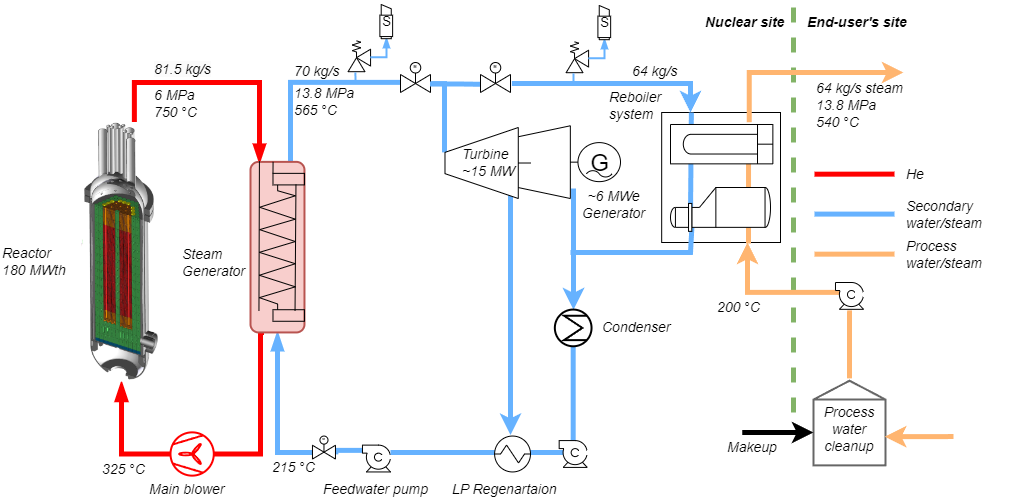
The publication describes two reactor designs that could be used in such systems. The first is HTGR-POLA, a demonstration reactor designed by engineers from NCBJ and JAEA, intended to test the technology in practice and gain the experience needed to build larger installations. The second project is GEMINI+, a concept for a future combined heat and power plant for industrial applications. Installations of this type could simultaneously supply electricity, high-temperature heat and hydrogen to various sectors of the economy.
The researchers also analysed two methods of producing hydrogen using energy from the reactor. The first is high-temperature steam electrolysis (HTSE), in which water is split into hydrogen and oxygen using electricity and high temperatures. The second solution is the so-called sulphur-iodine cycle, a chemical process that breaks down water into hydrogen and oxygen through a series of chemical reactions using sulphur and iodine compounds as reaction carriers at the very high temperature provided by the reactor. Both solutions can increase the efficiency of hydrogen production compared to classic water electrolysis.
The authors also conducted a technical and economic analysis in which they estimated the costs, efficiency and competitiveness of such an energy system compared to other energy sources.
“The results indicate that hybrid energy systems based on HTGR reactors can be a competitive and more sustainable alternative to industrial heat production from fossil fuels. Hydrogen production in such installations has great potential, although further research is still needed on the durability of the technology, improving efficiency and reducing costs. Currently, the lowest-cost hydrogen is still produced from natural gas through methane reforming, but systems using HTGR as a heat source can be more than twice as cost-effective as conventional fossil fuel units" concludes Błażej Chmielarz.
According to the authors, the introduction of this technology to the market should proceed in stages – from demonstration installations, such as HTGR-POLA, to full-scale industrial installations, such as the GEMINI+ project. Commercialisation will require further research and development and, above all, appropriate regulations, a financing model, political support and cooperation between science, industry and public institutions. The researchers believe that high-temperature gas reactors could play an important role in reducing CO2 emissions and providing energy for industry in a more sustainable way in the future.
If similar solutions are implemented on a larger scale, they could bring significant social benefits. The production of industrial heat and hydrogen without the use of fossil fuels would mean lower greenhouse gas emissions and thus a smaller impact of industry on climate change. At the same time, a stable energy source for the economy could increase energy security and facilitate the development of new industries, such as the hydrogen industry.