English
 Polish
NCBJ improves molybdenum-99 production efficiency
18-06-2026
Molybdenum-99, produced in the MARIA reactor, is the isotope most commonly used in nuclear medicine procedures. Scientists at the National Centre for Nuclear Research have improved the isotope production process, which will increase its efficiency and reduce costs by as much as 14%. The optimisation and stabilisation of production will make it possible to save the lives of hundreds of thousands of patients.
Radioactive isotopes are used in many sectors of industry and science. They play a particularly important role in medicine, where they can be used to diagnose and treat diseases that cannot be effectively cured by other means. It is therefore crucial to establish and maintain nuclear programmes that will ensure the continued production of radioisotopes. Currently, the main sources of radioisotopes for medical purposes are nuclear research reactors and particle accelerators. Nuclear reactors are particularly important, due to their ability to produce large quantities of a wide variety of isotopes.
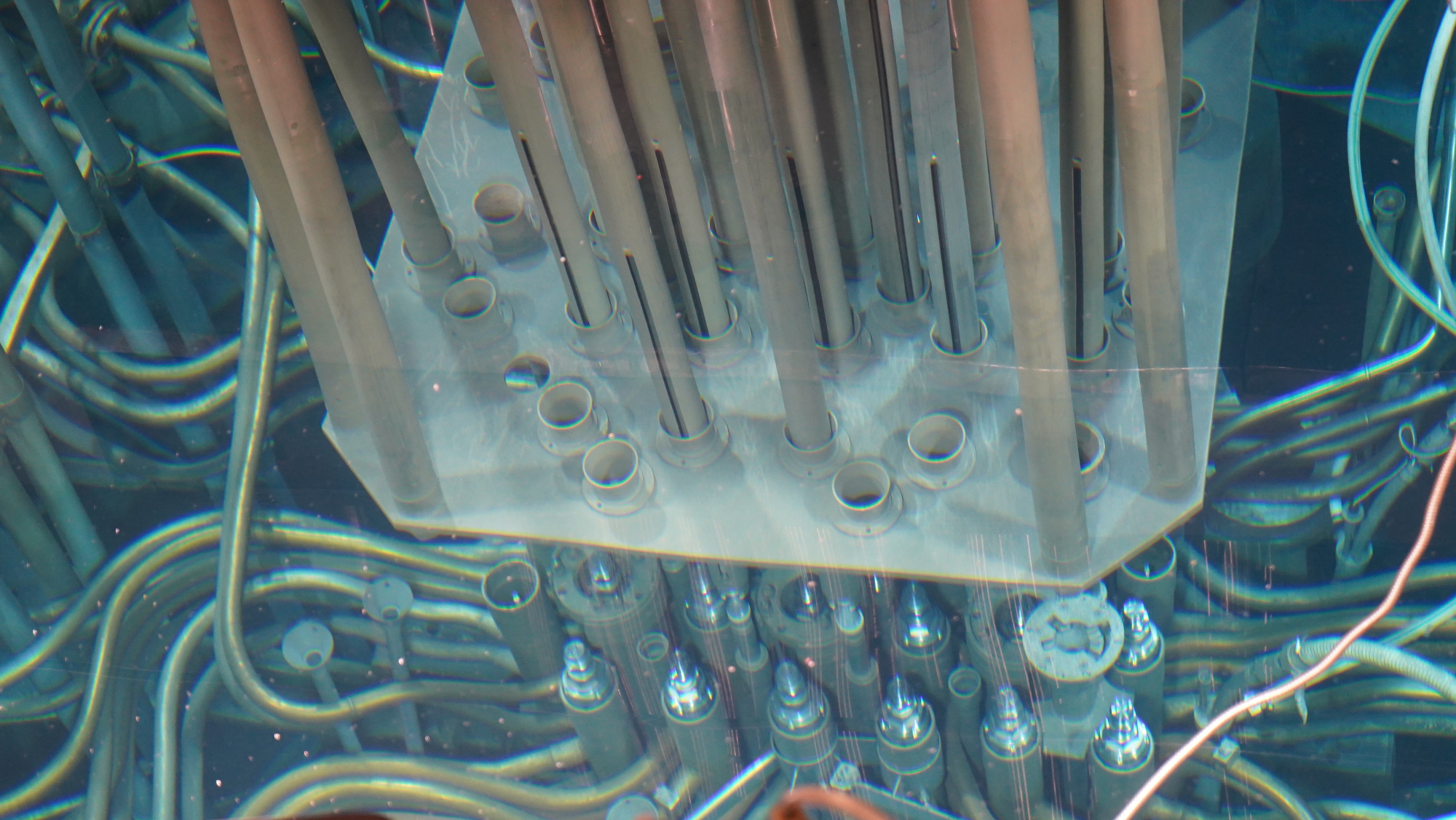
One such reactor is the MARIA research reactor, which operates at the National Centre for Nuclear Research. Unlike power reactors, MARIA operates in cycles that typically last 5–7 days. Special isotope channels in the reactor core contain so-called target materials, in which radioactive isotopes are produced when exposed to a neutron flux. Every year, thousands of containers are placed in the reactor, in which iodine-131, sulphur-35, phosphorus-32, samarium-153, yttrium-169, cobalt-60 and molybdenum-99 are produced.
The MARIA reactor was adapted to produce molybdenum-99 as early as 2010, when there was a shortage of this isotope on the global market. Since then, the reactor has become one of the key suppliers of molybdenum, often stepping in to take over production at short notice in the event of unplanned outages at other reactors. It is therefore vital to improve the process of producing molybdenum-99 in order to ensure its availability to patients. For this reason, the latest research by specialists at the National Centre for Nuclear Research (NCBJ) has focused on optimising Mo-99 production. The results were recently published in the journal Nuclear Engineering and Design.
The work involved developing an analytical description of how production efficiency and costs depend on parameters such as the number and duration of irradiation cycles, and the shuffling of target materials within the core. The optimisation process itself utilised an advanced code for modelling nuclear reactions combined with a genetic algorithm – a method inspired by biology and evolutionary theory. The combination of theoretical predictions with modelling and simulations demonstrated that the number of irradiation cycles has the greatest impact on efficiency.
– Producing molybdenum over the course of 2–3 reactor cycles can reduce production costs by as much as 14% compared to a single cycle. However, while the shuffling of target materials does indeed increase efficiency, the gains are in the order of tenths of a percent, so the benefit of this process is negligible – explains dr. Eng. Wojciech Kubiński from the NCBJ Reactor Research Division, author of the analysis.
The research confirms that adjusting irradiation parameters can increase efficiency and reduce the production costs of molybdenum-99 in the MARIA reactor. Planned future work will expand the analysis to include more radioisotopes, different arrangements of target materials in the isotope channels, and additional optimization algorithms. Thanks to this work, the production of radioactive isotopes will become more efficient, which could alleviate global shortages and save the lives of thousands of patients undergoing nuclear medicine procedures.
The research results are available in the publication: W. Kubiński, R. Prokopowicz, Optimization of the cost and efficiency of Mo-99 production in the MARIA reactor, Nuclear Engineering and Design, Volume 454, 2026, 114926, ISSN 0029-5493, https://doi.org/10.1016/j.nucengdes.2026.114926.