English
 Polish
NCBJ researchers have developed an innovative applicator for the AQURE accelerator
04-12-2025
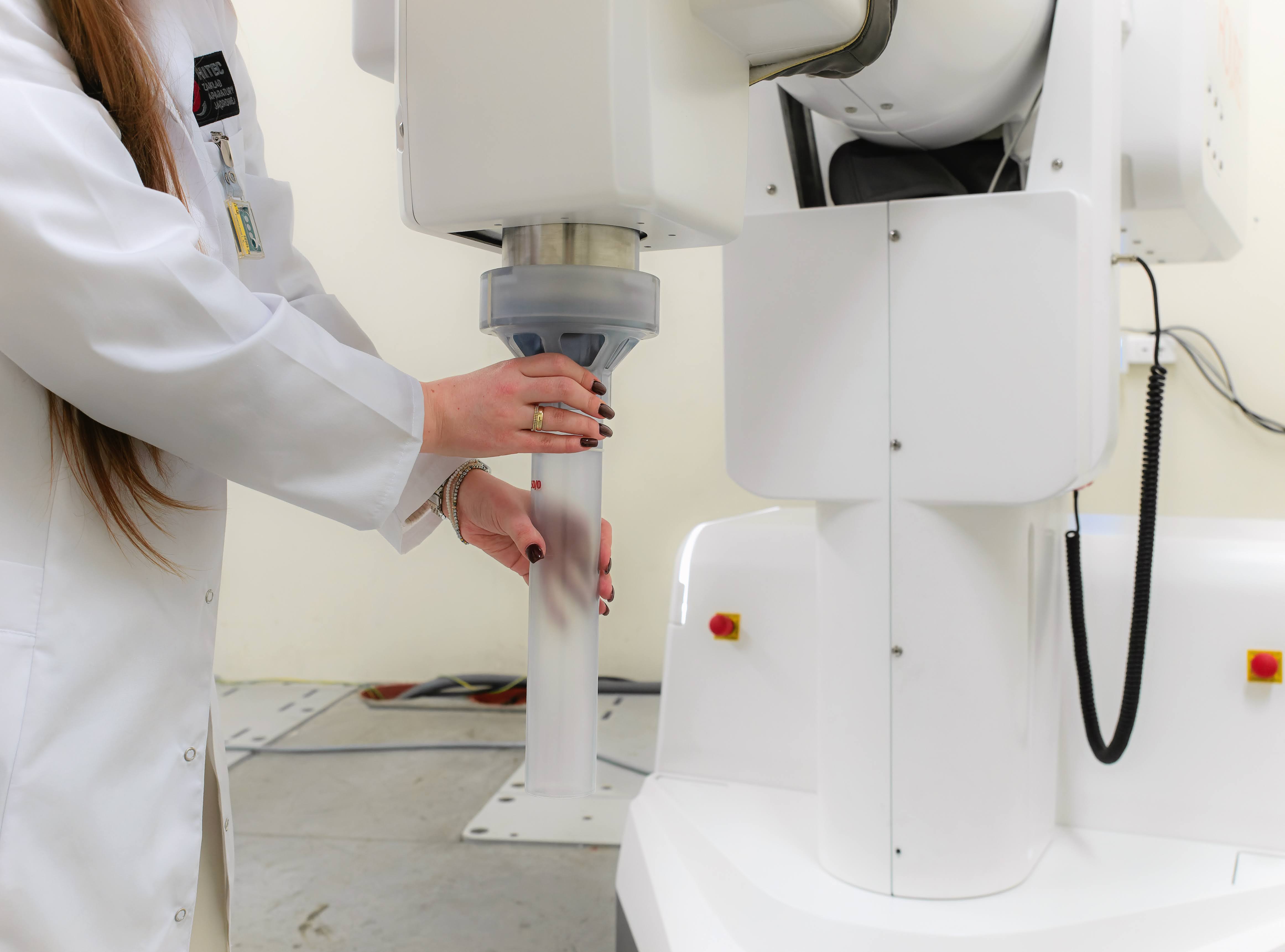
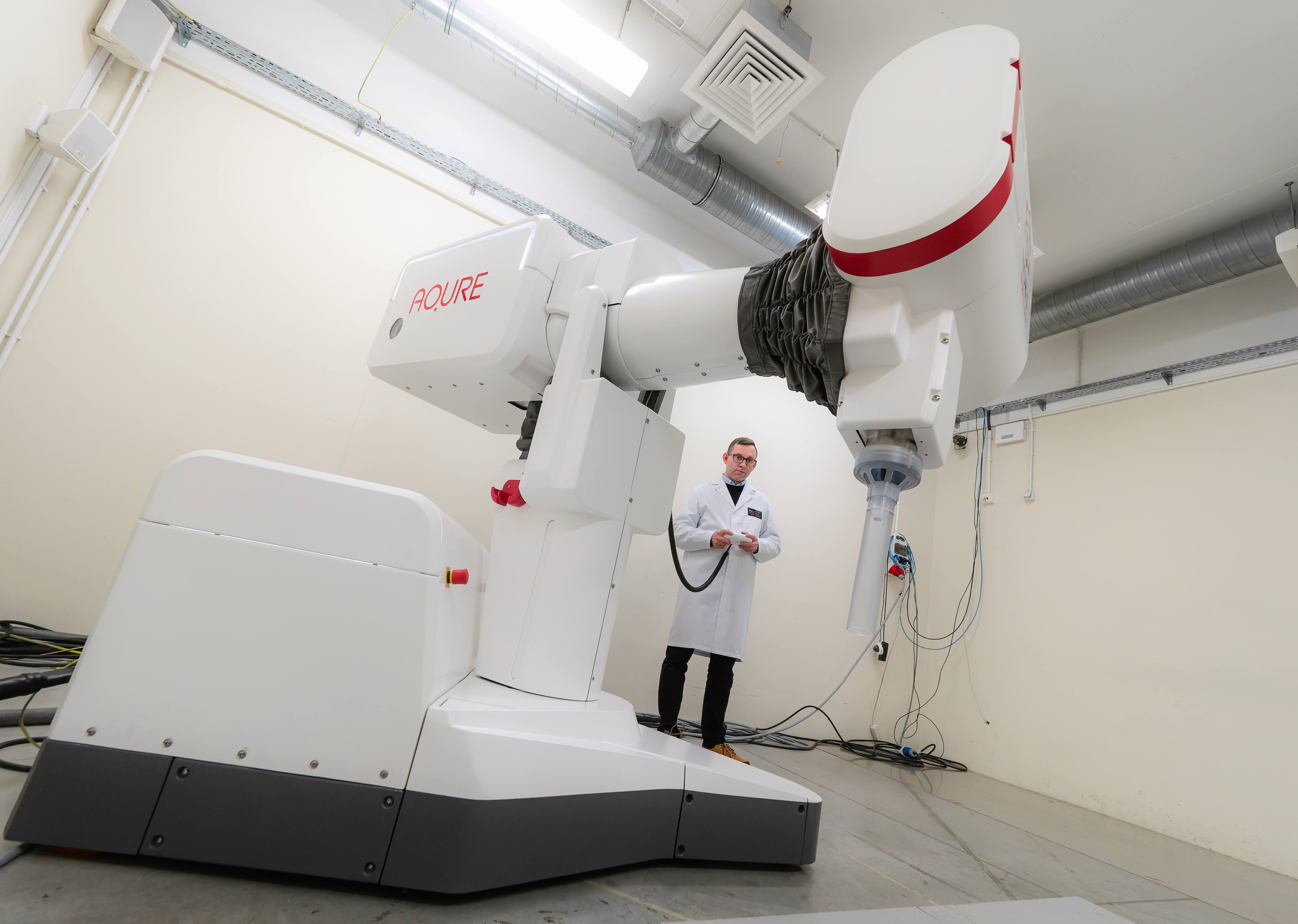
In order to precisely deliver the radiation dose using an intraoperative accelerator, a properly designed applicator is necessary. The National Centre for Nuclear Research has developed a modern applicator dedicated to the AQURE accelerator. This innovative component is lightweight, transparent and enables safe irradiation of tissues after tumour removal.
The use of intraoperative electron radiation therapy (IOERT) allows for the eradication of cancer cells that may remain in the patient's body after tumour removal. It involves administering a dose of radiation to the postoperative bed immediately after surgery. The use of this method increases the effectiveness of treatment and patient comfort by replacing traditional radiotherapy. However, in order for the radiation dose to be delivered directly to the body, a special applicator connected to an electron accelerator is required. This element forms the final shape of the radiation beam and ensures that it is evenly distributed over the entire area intended for irradiation. In addition, the shape of the applicator ensures that ionising radiation is dispersed as little as possible outside its perimeter, which protects nearby healthy tissue.
The design of a suitable applicator for use in intraoperative radiotherapy requires many requirements to be fulfilled. The element should be made of a lightweight, transparent material that does not cause adverse reactions when in contact with the body. Furthermore, the material must be resistant to radiation and sufficiently shield the patient's nearby tissues. At the same time, the walls of the applicator should be as thin as possible so as not to increase the incision necessary for its insertion.
A group of scientists from the National Centre for Nuclear Research, the Wielkopolska Cancer Centre and the CADXPERT 3D printing service centre conducted research to determine the optimal shape and material of the applicator that would meet all of the above requirements. As part of the work, Monte Carlo simulations were performed to determine the necessary wall thicknesses for several materials, such as stainless steel, aluminium, PMMA (polymethyl methacrylate – plexiglass) and MED610 resin. - The thinnest walls would be obtained using steel or aluminium. Unfortunately, the minimum thickness of 1.5 mm would make the end of the applicator sharp, which would exclude its use for this purpose. Increasing the wall thickness, on the other hand, increases the weight of the entire element, up to 9 kg in the case of steel. The applicator is first placed in the patient's body and then attached to the accelerator head, so its heavy weight makes it impractical for use by a physician - explains Agnieszka Misiarz, MSc, Eng., from the Department of Nuclear Equipment HITEC at NCBJ, the first author of the publication. The results obtained for PMMA also raised doubts – the necessary wall thickness reached up to 20 mm.
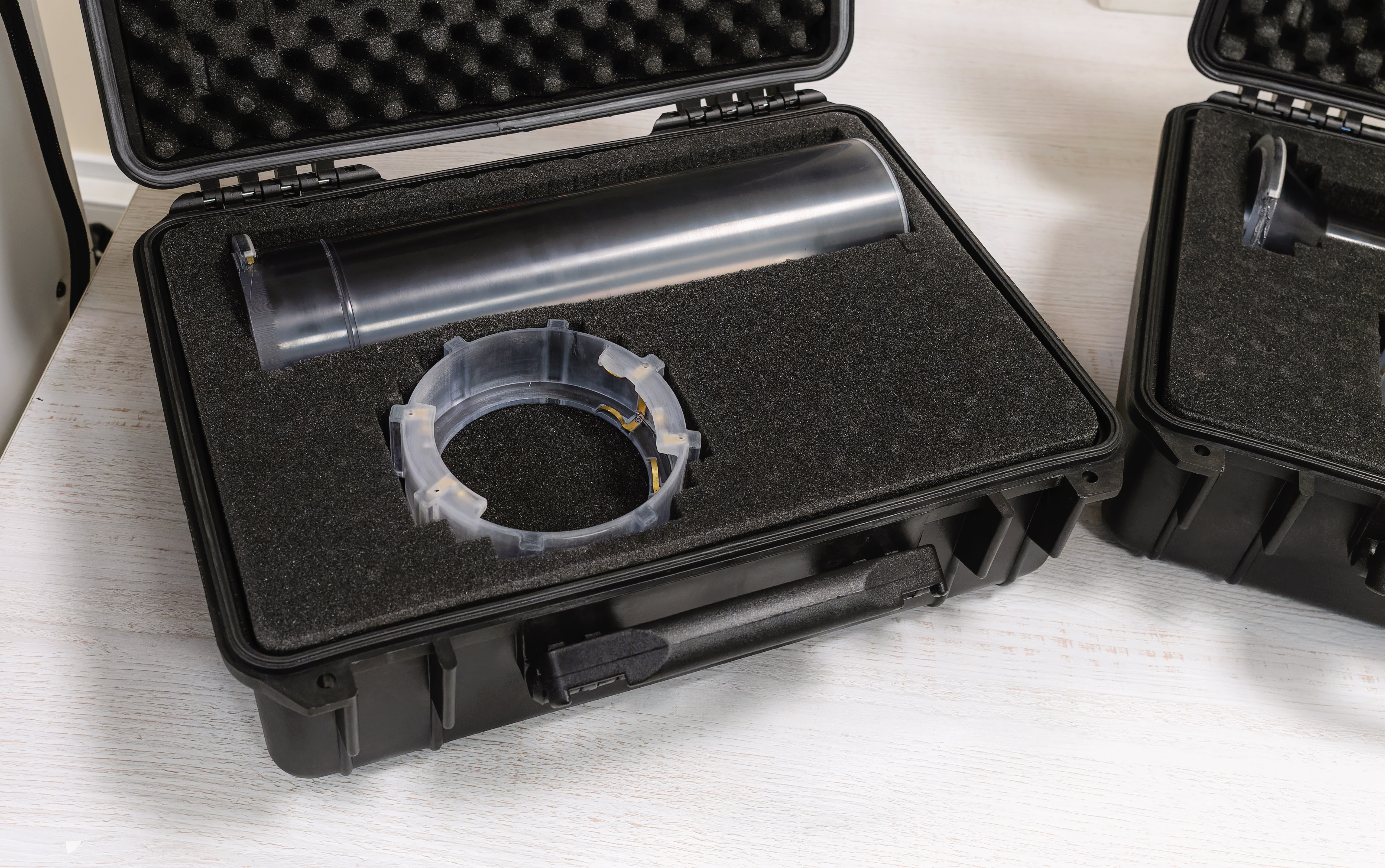
The new approach taken by the researchers was to redesign the shape of the applicator so that the walls became thinner with distance from the accelerator head. This solution made the structure stable at the accelerator head and the end thin enough not to increase the size of the necessary incision. However, the new shape required the use of a different material and a different production technique, as the designs made of metal and PMMA used commercially available parts with a fixed wall thickness. The researchers chose MED610 resin for this purpose, and the applicator was made using 3D printing. MED610 is a material used, for example, in dentistry – a transparent resin with high stability and biocompatibility. It is radiation-resistant, can be sterilised at low temperatures without losing its properties, and is approved for long-term contact with the skin or short-term contact with mucous membranes. Its form makes it suitable for use in 3D printing. This means that there are no restrictions in terms of the shape of the element. In the case of the applicator for the AQURE accelerator, the PolyJet 3D printing technique was used, which enabled precise reproduction of the complex shape of the walls with an accuracy of 14 micrometres.
Dosimetric measurements of the applicator made in this way confirmed that it meets all the requirements necessary for its use in intraoperative radiotherapy. - Our project has demonstrated the advantages of using 3D printing technology for medical applications. Thanks to the cooperation of several teams, we have created a modern applicator for the AQURE accelerator, which is lightweight, biocompatible and can be used in cancer treatment. 3D printing also offers greater freedom in shape design, so that in the future, personalised components for specific applications can be created - summarises Jan Trzuskowski, Technical Director of the Department of Nuclear Equipment HITEC at NCBJ.
The research was conducted as part of a project co-financed by the Wielkopolska Regional Operational Programme 2014–2020 entitled: "Creating the possibility of implementing intraoperative electron radiotherapy using the innovative AQURE electron accelerator at the Wielkopolska Cancer Centre".
The full results of the work on the developed solution are available in the article: Misiarz, A., Kujawiński, Ł., Baran, M., Kaczmarek, M., Trzuskowski, J., Guzdek, K., Kruszyna-Mchalska, M. & Pawałowski, B. (2025). 3D printing from a biocompatible material for a new design of electron applicators of the intraoperative accelerator. Polish Journal of Medical Physics and Engineering, 31(4), 2025. 290-295. https://doi.org/10.2478/pjmpe-2025-0033