English
 Polish
NCBJ joins the group of Net-Zero Poland stakeholders
04-12-2025
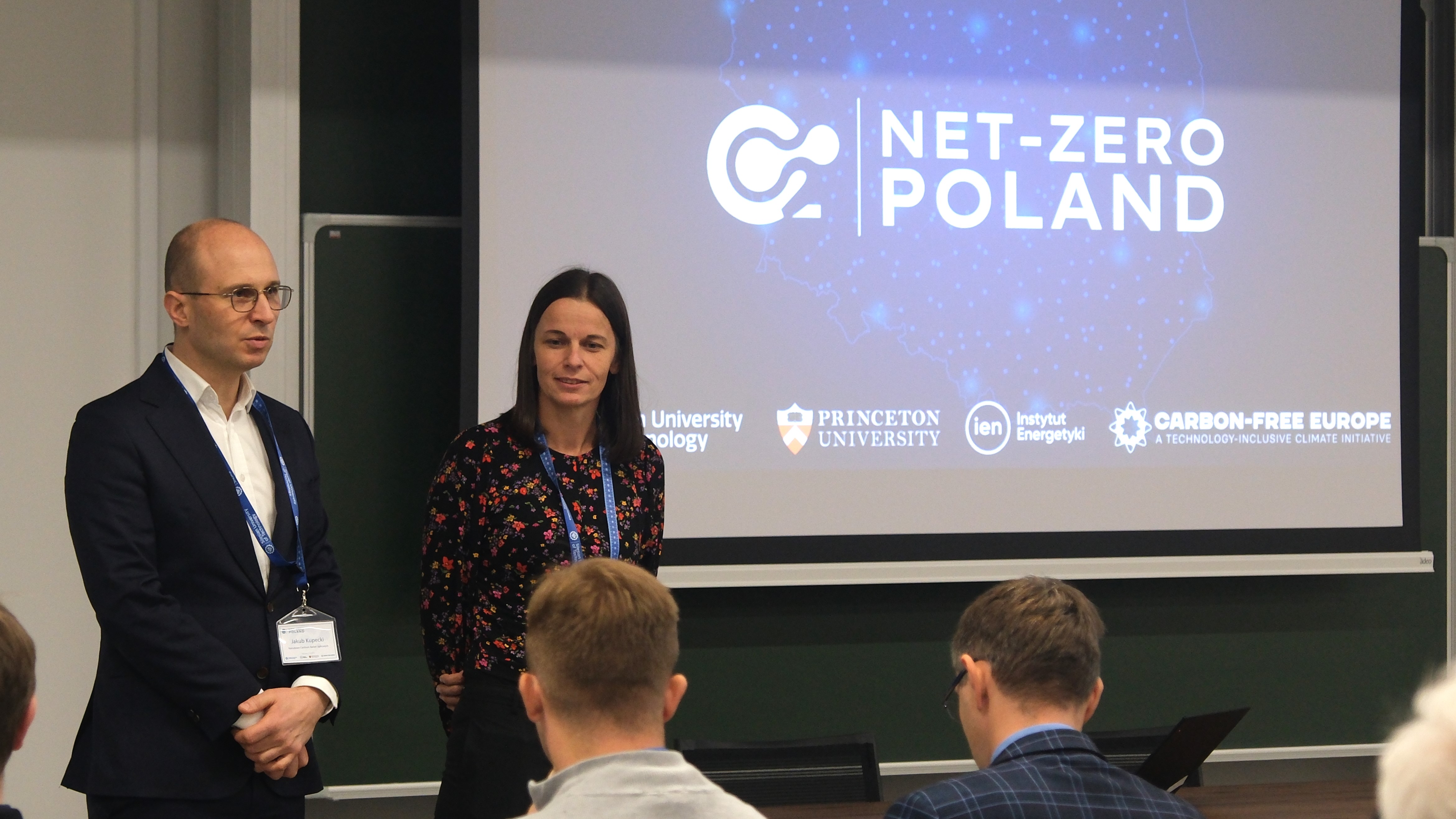
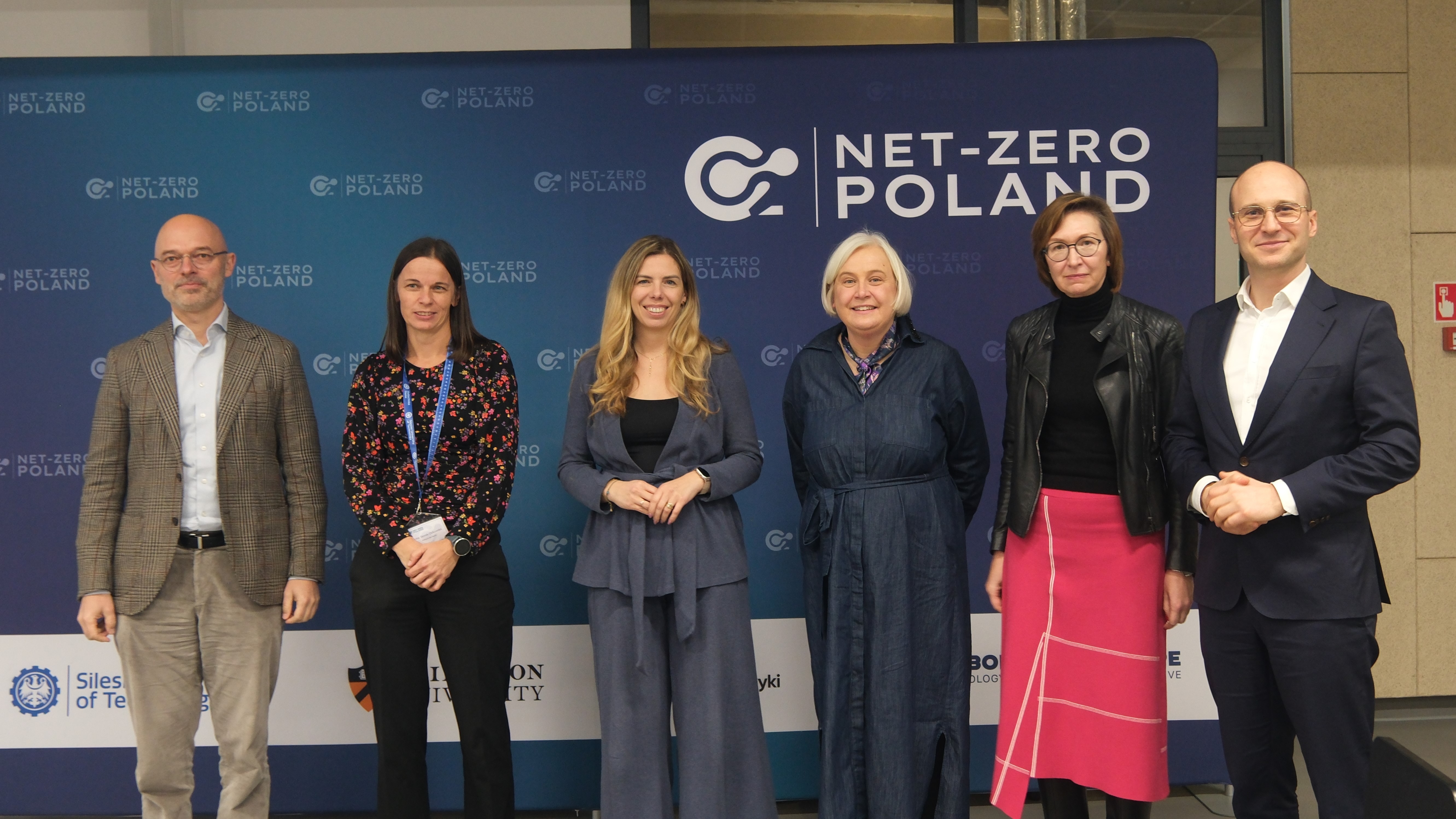
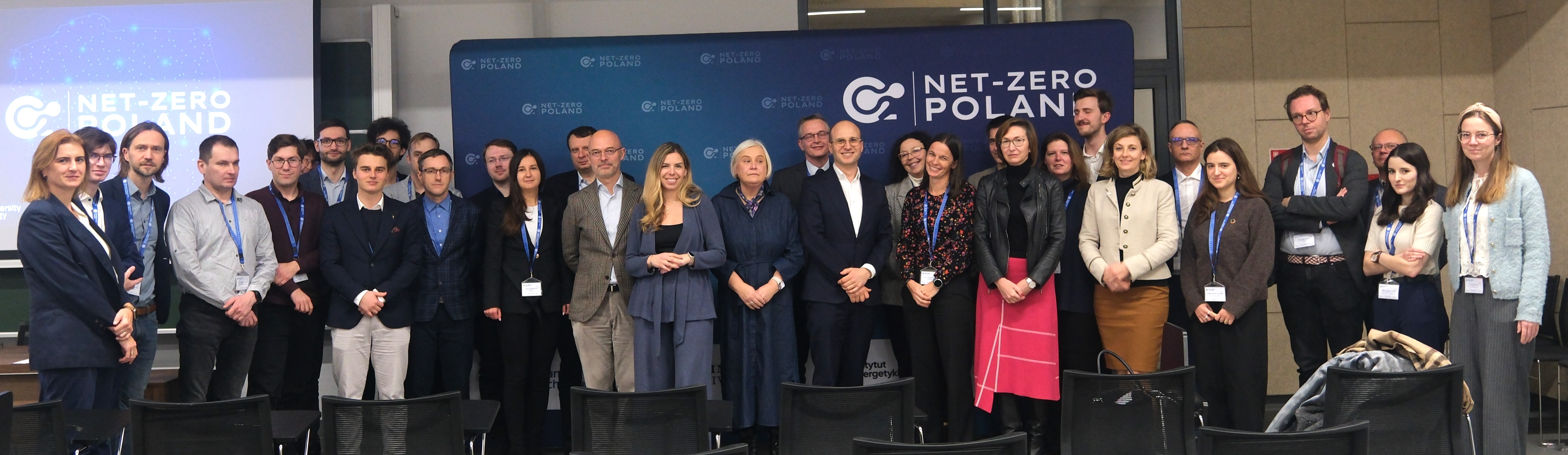
On 27 November, a seminar on the Net-Zero Poland project was held in Warsaw, attended by members of the Advisory Committee and project stakeholders. The event brought together a large group of representatives from the scientific community, public administration, the energy sector and social organisations. The National Centre for Nuclear Research was represented by Prof. Jakub Kupecki, dr Agnieszka Boettcher and mgr inż. Janusz Malesa.
In the first part of the meeting, Net-Zero Poland experts presented the key elements and results of the second phase of the project to date. These included spatial and temporal details of energy asset development in various net-zero emission scenarios, the methodology for modelling the development of the power grid, and a fundamental question for the project: how to achieve net-zero while maintaining the reliability of energy supplies?
The second part of the seminar was a panel discussion attended by, among others, former Ministers of Industry and Climate and Environment. The discussion focused on the energy transition from both a regional perspective and in terms of the global connections that form a network ensuring the country's energy security. The panellists also attempted to answer the question of where Poland's strategic thinking fits into all this, which should be reflected in documents setting out the framework and direction for the development of the energy sector.
What is Net-Zero Poland?
The project, which is being implemented by a consortium comprising the Silesian University of Technology, the Energy Institute – National Research Institute, Princeton University and Carbon Free Europe, is based on the groundbreaking Net-Zero America (NZA) initiative. It was carried out by a team from Princeton University and has been documented to accelerate policy action to mitigate climate change in the United States. The NZA project was successful thanks to its unique approach to detailed mapping of alternative energy technology pathways leading to net-zero emissions by 2050. It took into account spatial, temporal, sectoral and technological aspects, as well as key socio-economic implications. Mapping at a level relevant to people, society and politics proved extremely informative and resonated with a wide range of stakeholders from the government, private and civil society sectors. This enabled representatives of different sides of the energy debate to find common ground or compromises on the choice of different pathways. The project left a visible mark on two landmark federal climate bills passed by the US Congress.
The success of the NZA project led to Princeton establishing cooperation with Australian partners on a similar venture, Net-Zero Australia, which also proved successful. This demonstrated the applicability of the NZA approach outside the United States. Net-Zero Poland is one of the next projects in the NZx group and the first such undertaking for a European country. Poland's case is complex, particularly due to its high dependence on coal and gas. However, a successful NZP study will initiate similar projects in other European countries and accelerate the decarbonisation of the continent.